

Where Caribbean Islands Still Belong to a Native Tribe
Panama’s remote San Blas Islands lie off its northern coast and is a hidden paradise with clear,
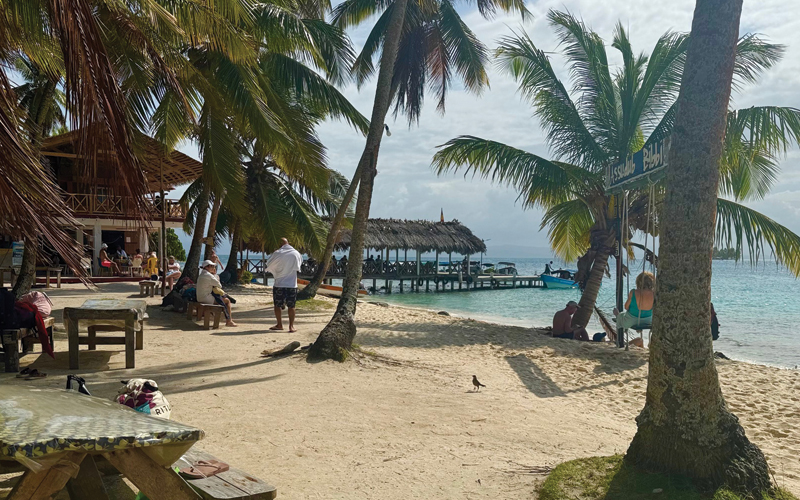
turquoise waters, coral reefs and white sandy beaches. There are no resorts, no high rise hotels, no Michelin starred restaurants. No pina coladas around the pool, no cruise ships hovering off the coast. Just small, palm-dotted islands, with thatched huts hidden behind the veil of coconut palms, the only hints of civilization. But what makes these islands truly unique is not just their natural beauty–it’s who runs them.
Known locally as the Guna Yala comarca (administrative region), this archipelago of more than 360 islands spreads one hundred miles across the Caribbean coast of Panama—and is controlled by the indigenous people who live there … the Guna. Here, not far from the busy shipping lanes of the Panama Canal, the Guna people live simple lives, disconnected from the modern world. They are determined to preserve one of the Western Hemisphere’s most distinctive cultures. And it’s paradise. Well, paradise for visitors who don’t need room service.
A Traditional Culture Survives
During the early 20th century, the indigenous Guna people were pressured by the Panamanian government to abandon their traditional culture and assimilate as “westerners.” Guna women were ordered to stop wearing traditional beaded leggings and brightly colored mola blouses. Guna leadership was suppressed. Villages lead by local councils were placed under government control. Reports of abuse by colonial police circulated, further stirring the community pot of anger. The pot boiled over as the Guna Revolution of 1925, a short but dramatic conflict that won the tribe independence and insured its survival.
Today, the islands are an autonomous territory governed by the Guna people under the distant sovereignty of Panama. Guna councils regulate tourism and land ownership and maintain traditional cultural practices. The Guna have their own flag, flown proudly in every island community. Its traditional Guna emblem rather disconcertingly resembles a backwards swastika, an ancient glyph unrelated to the later Nazi symbol.
Glimpsing the Guna flag takes some work. The territory lacks public transportation and no ferries to the islands. But if you’re willing to spend big bucks, you can book charter flights or Air Panama’s limited hops to some islands.
Winding Roads to a Waiting “Lancha”
It was still dark when a 4×4 SUV picked us up at our hotel at Panama’s Tocumen International Airport. The van ride would become a big part of our San Blas adventure. Our instructions were to bring “only essentials,” so we transferred some basics into backpacks and duffels, storing our suitcases at the hotel.
Victor Perez, a Guna tribe member and owner of LOCALINPTY EXPERIENCES, arranged all our travel plans in advance via Facebook and Whatsapp. This corner of the Caribbean is not a destination to navigate on your own–too many logistics! Victor and a few other Guna-approved tour operators run day and overnight trips to the islands.
Our van headed to Puerto de Carti to catch a lancha, a motorized boat that acts as a taxi to and between the islands. No one warned us about the three-hour ride on the Carretera El Llano-Carti, the only road connecting the Guna Yala to the rest of Panama. Imagine an endless loop on the Coney Island roller coaster– an extremely steep, narrow paved road with continuous hairpin turns through the Guna Yala jungle. Prone to motion sickness, I warded off nausea by concentrating on the views out the window as the landscape morphed from lush mountains to thick jungle to rainforest to a glorious cerulean ocean-scape.
Just after daybreak, the van stopped for a quick breakfast at a village bakery, busy even this early though the sun was barely up, serving fresh buttery orejas (Panamanian pastries) along with the country’s renowned Duran coffee. Next stop, the checkpoint at the border of Guna territory. Passports were inspected and a foreign tourist fee of $22 was collected, revenue channeled to community maintenance, infrastructure and education within the Guna Yala region.
We all sighed with relief when the road ended at Puerto de Carti, a small, busy port with wooden docks crowded with boats. The atmosphere was lively with chatter as we were guided to our waiting lancha, a rustic blue boat with a canvas tarp to shelter us from the blazing sun and strong wind. A few Guna grannies hauled huge bags of supplies–and their grandchildren– aboard the lancha as we climbed in. Off we all went, the wind whipping us, the spray soaking us as the lancha sped across the water toward the distant archipelago.
A Hammock, The Waves and Star-filled Skies
We docked on Niadub (dub means island in Guna), an islet with a sandy beach dotted by a few palm trees. A short boardwalk led to a spacious overwater bungalow containing our spare, clean rooms with showers, flush toilets, and limited solar-powered electricity. The spectacular ocean views were best appreciated swinging from a hammock outside the door. Ocean breezes provided our air conditioning, and the waves and winds supplied our music. Geckos sunning and scampering across the deck provided our entertainment.
As our guide Victor revved up his lancha motor, he told us “here’s where you decompress. I’ll come back for you later.” A welcome lunch was being prepared by a Guna family who rotate cooking duties amongst the neighboring island community. They served us a traditional lunch of chicken and fish with rice as their toddler amused us, proving even more adorable than geckos. This welcome embodied what the Gunas call Anmardule, meaning “Our People,” their community-based approach to tourism. And we were loving it.
Visiting a Traditional Village
Walking with us through the island community of Wichub Wala, Victor was greeted warmly by the locals. Grass huts lined the dirt streets, barefoot children played, the Guna flag waved in the wind. Handmade dugout canoes along the shore just above the high-tide mark awaited morning fishing runs. The rhythm of life was slow here.
Women in beaded leggings, and vividly colored head scarves and blouses were busy making their molas, intricate layered textiles made by layering and stitching multiple pieces of cloth into detailed designs. Finished molas were hung from huts, brightening the earthy landscape with vibrant primary colors. Far more than decoration for clothing, these striking panels are works of art that reflect the cultural identity and creative traditions of the Guna people. Lucky for us, they were all for sale.
Controlling Tourism
Since the Guna Revolution a century ago, land in Guna Yala cannot be privately owned by non-Guna. Foreign investors cannot build resorts or buy land. Large hotel chains are essentially off-limits and tourism businesses must be owned or approved by Guna communities. Any visitors who choose to stay overnight are offered simple, family-run bungalows or thatched-roofed cabins on the water. Tourism profits stay in a community.
Locals have total control of their island and most limit the number of daily tourists. Each island is authentic and undeveloped and a far cry from a Caribbean beach resort.
The Islands are definitely on the alternative tourist map. Young backpackers, families and curious culture seekers come for snorkeling, diving, sailing, fishing and to just “decompress” as Victor said. Approximately 500,000 make their way here annually, though fewer than half spend the night. Peak months are December through April, Panama’s dry season, when rainfall and humidity are lower and seas are calmer. “Tourism in Guna Yala is growing, but it’s still very different from the rest of Panama. It’s intentionally limited,” explained Victor Perez. “The Guna people have always protected their territory, culture and way of life,” he asserted. “That’s something we’re proud of.”
Climate Change May Soon Change the Way of Life
Rising sea levels are already affecting some Guna islands. Ongoing conversations within the communities and the governing Guna Congress address relocation to the mainland. Some communities have already started that process. For the Guna, so deeply tied to their islands, their loss is controversial and heartbreaking.
In a world where so many tropical destinations have been heavily developed, the San Blas islands still feel refreshingly real. For an intrepid travel client intent on rich cultural experiences and tolerant of jungle roads and no wifi, now is the time to go. Sadly, the clock is ticking for this idyllic island paradise.
For further information: Victor Perez at localinpty@gmail.com, 507 6118 7621. He offers a 10% commission to travel agents.