

China: Pandas, Pagodas and Mist-Shrouded Mountains
Following the boardwalk trail through Tribe of the Three Gorges Scenic Spot,
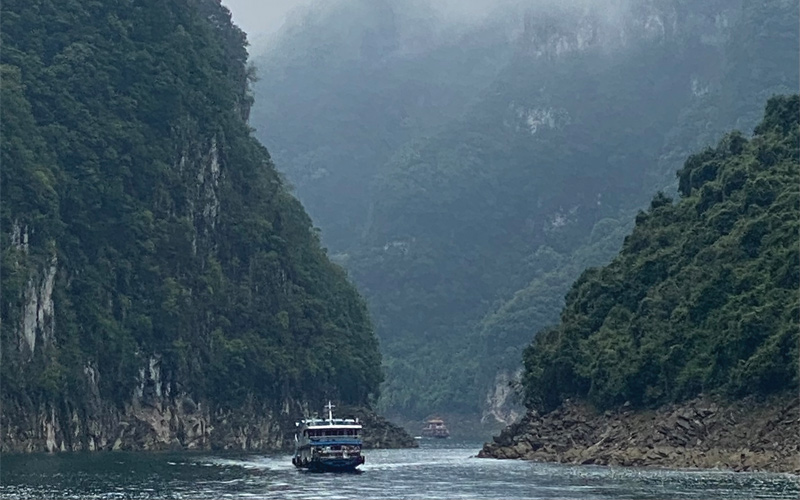
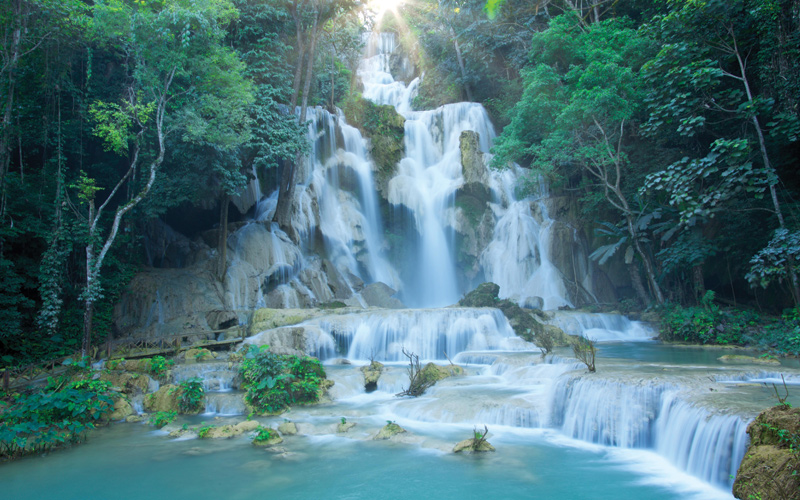
I was enchanted by the plaintiff melody of a single bamboo flute. I traced the sound to a man standing at the edge of a river in the shadow of mist-shrouded mountain peaks. Like all the re-enactors in this eco-cultural park, he was dressed in brilliantly colored ethnic garb. Our guide said he was sending a courtship message and pointed to a girl shaded by a parasol on an ancient-style wooden sailboat. The scenery and wildlife were as captivating as the costumed interpreters, including a flock of Mandarin ducks, a golden pheasant, and everyone’s favorite, the macaques who gathered on huge rock formations alongside a waterfall.
This was one of many immersive excursions I enjoyed on a five-day/four-night cruise up the Yangtze River with Victoria Cruises. (The down-river cruise is only three nights.) It was part of a nine-day fam trip sponsored by the Chinese National Tourist Office that also spent five nights in Chengdu. Most of us were on our first trip to China and were impressed with what we found.
“The Chinese people were much more friendly than I expected,” said Arlene Hagley, founder, Live Fabulous Travel. “So many were open to speaking to us, taking our pictures and genuinely curious about foreigners and black travelers like myself.”
“The cities were beautiful and so clean and well managed, especially the travel network of buses and bullet trains throughout the country,” she added. “And experiencing the Yangtze river on the Victoria Sabrina was beyond wonderful…not only our accommodations and meals but the staff and the tours.”
Luxury Yangtze River Cruise
Our ship, the 186-cabin Victoria Sabrina, provided a comfortable home base, with English-speaking staff including an American cruise director and bilingual programming. My cabin, an executive suite, was over 375 square feet, with a balcony and access to a private lounge, complimentary happy hour and upgraded dining room with a la carte (vs buffet-only) dinners. Access to the lounge and upgraded dining can be purchased as an add-on to superior cabins (about 270 sq. ft.). The largest suite was the 570 sq. ft. Shangri-La.
The Victoria Sabrina is operated by U.S.-based Victoria Cruise Lines. Meals include a wide selection of Western and Chinese dishes, bathrooms are Western-style, and wi-fi and access to American channels like CNN and HBO is complimentary. A note for mobility-challenged travelers: Executive suites are on the 6th floor and require walking up a flight of steps. Also, depending on water levels, going ashore can involve climbing multiple flights of stairs or steep ramps as did several excursions.
The ship has a massage center and everyone in our group who opted for a massage raved about their experience. Entertainment included a cultural show, an informative presentation on the Yangtze River and wonderful live narration as we passed through the gorges.
A variety of included and optional excursions allowed travelers to be on the go all day or take a more relaxed pace. Among the most impressive was a tour of the Three Gorges Dam, the largest hydroelectric plant in the world, where we learned that the dam solved the problem of life-threatening flooding and navigational challenges and generates roughly 20 times more electricity a year than the Hoover Dam.
We were told that an estimated 1.2 million people were displaced by the dam and a growing number of cultural parks are meant to help preserve their heritage. In addition to Tribe of the Three Gorges, we visited Xiaoguanshan Cultural Park, where actual city gates, homes and other buildings from the Ming (I4th to 17th century) and Qing (17 to 20th century) dynasties were meticulously moved and rebuilt, and the White Emperor City, which brings to life the story of Liu Bei, a legendary 3rd century leader.
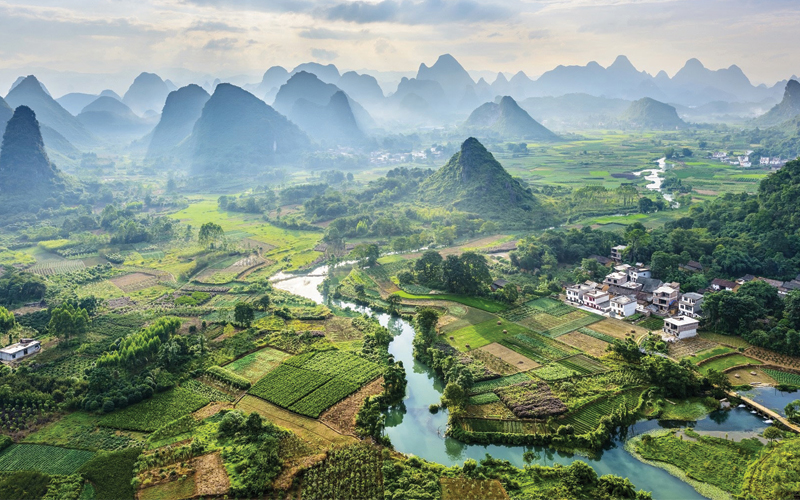
A highlight of the cruise was sailing along Shennong Stream and through the Wu and Qutang Gorges. Cloudy mist swirled around the peaks, and in places, we cruised through narrow, cavernous passages. Equally stunning was a hiking excursion through the Mt. Wuling Great Rift Valley where paved footpaths wound through a forest-cloaked karst landscape through canyons so deep and narrow we sometimes lost sight of the sky.
Chengdu and Panda Life
We disembarked in Chongqing and after passing through airport-level security, our group boarded a high-speed train. An hour later, we were in Chengdu, a city that prides itself on its panda rehabilitation and a slow-paced panda lifestyle.
We headed right for Kuanzhai Alley, aka Narrow and Wide Streets, and were instantly immersed in local arts and crafts. On the balcony of a lovely courtyard, a woman’s scarf dance told a folk love story. Elsewhere, costumed warriors posed with passersby, and musicians played. We saw women weaving pandas and dreamy scenes to be used as wall hangings, purses and other items sold in surrounding shops and silversmiths working in gleaming stores showcasing jewelry, tableware and other handcrafted items.
Chengdu is awash in pandas, from dolls to socks and purses to giant panda light shows that play across its high-rise buildings, but there’s nothing like the real thing. As we followed bamboo-shaded trails through forested Chengdu Field Research Center for Giant Pandas, we learned that giant pandas spend most of their time eating and sleeping. That made them easy to spot while their accentuated eyes and cuddly looking bodies make them irresistibly adorable. We were happy to learn that sanctuaries like this are helping their populations grow.
Tea, Massage and Matchmaking in People’s Park
We spent several hours in People’s Park, home to several tea houses where guests sit on bamboo chairs and tea is showily poured from long-spouted kettles and licensed ear cleaners and deep-tissue masseurs circulate, offering their services.
Most amazing, especially after watching the endearing film “Shanghai Wonton” on the flight over, was a matchmaking area where parents come with “resumes” of their adult offspring. In addition to good education and jobs, a key selling point was having both parents set for retirement with pensions as, by custom, children take care of their parents.
That evening, we went to the Sichuan Opera Theater which had a 90-minute sampling of hand shadow play, stick puppetry, acrobatics, fire-spitting and the rapid face (mask)-changing used to express emotional shifts that the region is famous for.
Food, Glorious Food
Chengdu is deservedly a UNESCO City of Gastronomy. Everywhere, it seemed, there were exotic foods to try, from fresh fresh wontons to Chengdu sweets like sugar paintings of molten liquid sugar hardened on stone slabs into dragons and animals. One thing we learned about Chengdu cuisine is that it can be way spicier than most Americans are used to; our guide always arranged for the option of mild versions of dishes we were served.
One of our favorite experiences was at the Chengdu Sichuan Cuisine Museum, a plant-to-plate experience. We walked through herb gardens, stirred fermenting chili pots, ground chili powder with a pestle, watched a master chef slice super-thin noodles and took a cooking class where we learned to cook King Pau Chicken.
Another hands-on experience awaited at Mianzhu New Year Painting Village, a farming village where residents maintain the ancient custom of painting the exterior walls of their homes with murals to ward off evil and attract blessings for the entire community. At a workshop, we learned about traditional woodblock carving, printing and other techniques and pressed woodblock designs on thick bamboo pulp paper as souvenirs.
Among the most fascinating cultural experiences was visiting the Chengdu Shu Brocade and Embroidery Museum, said Debby Baptiste, co-owner, Mannah Travel, a Cruise Planners agency. “What I loved most was that this wasn’t simply looking at beautiful pieces behind glass. We were able to see the centuries-old techniques and craftsmanship that go into creating them.”
For more information, contact CNTO.org and/or www.VictoriaCruiseLines.com