

Swan Hellenic Ships See What Others Don’t
“An understanding of the natural world is a source of not only great curiosity but great fulfillment.” — Sir David Attenborough
Some cruises are expeditions; others make you see the world a little differently. Swan Hellenic Lines has built its identity around the latter, with a mantra that leads to swaths of our planet most will miss: “See What Others Don’t.”
While that still includes sailing to the frigid polar regions, the Arctic and Antarctica, which remain high on global explorers’ wish lists, it means so much more. With three purpose-built expedition ships and itineraries spanning six major regions of the world, Swan Hellenic has created an eclectic portfolio for travelers who want to go beyond familiar cruise itineraries.
The company’s roots are in cultural exploration. More than 70 years ago, Swan Hellenic began by accompanying members of the Hellenic Society to ancient sites in Greece, with scholars as guides. That combination of exploration, education and access remains central to the experience today. But today’s Swan Hellenic is a considerably bigger proposition.
Three ships, a world of possibilities
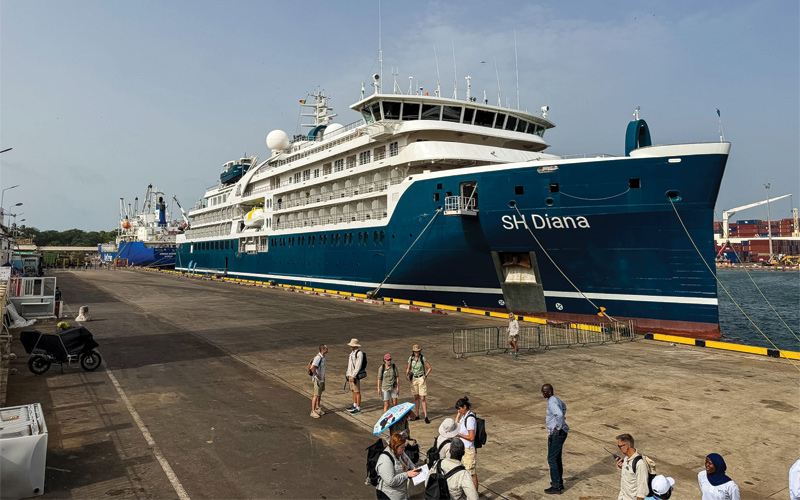
The fleet consists of SH Minerva, SH Vega, and SH Diana, three boutique expedition ships designed for intimate voyages rather than mass-market cruising. Vega and Minerva each accommodate 152 guests, while Diana carries 192 passengers. All three are ice-strengthened expedition vessels, allowing Swan Hellenic to move between demanding polar environments and warmer destinations around the globe. That versatility is one of the line’s most interesting aspects.
A traveler can board Vega for an Arctic expedition, choose Diana for an African coastal journey, or sail Minerva through some of the world’s least-visited island groups in the western Pacific. The ships retain their Scandinavian-inspired interiors, panoramic viewing areas, and expedition capabilities, no matter the latitude.
Cultural exploration
Cultural expedition cruising is where Swan Hellenic’s personality is perhaps most apparent.
Rather than treating a port as a place to pause for several hours, Swan Hellenic voyages focus on the history, archaeology, anthropology, politics, architecture, and traditions of their destinations. The expedition line covers a large swath of the Atlantic Ocean, from Norway to Cape Town at the southern tip of Africa, to the isolated Tristan da Cunha, then repositions to Ushuaia.
The intellectual component matters. Swan Hellenic brings historians, naturalists, marine biologists, geologists, photographers, and other specialists aboard its voyages, with experts participating in both lectures and the expedition experience ashore. It is a different proposition from simply looking at a destination from a tour bus window.
Polar exploration
The other extreme is ice. Antarctica and the Arctic remain major parts of the Swan Hellenic portfolio, with voyages into the Antarctic Peninsula, Weddell Sea, Svalbard, Greenland, Iceland and the northernmost reaches of Europe.
Here, the expedition experience naturally shifts toward wildlife, geology, glaciology, marine biology, and the extraordinary environment itself. Zodiac landings, nature walks, and expert-led interpretation bring travelers much closer to the landscape.
Swan Hellenic doesn’t limit itself to conventional Antarctic itineraries. One of its most extraordinary upcoming voyages will be the 33-night “Ultimate Antarctica Adventure,” sailing from Ushuaia, Argentina, to Dunedin, New Zealand, aboard SH Minerva in February 2027. The itinerary crosses the Antarctic region and reaches some of the world’s least-visited, uninhabited southern islands before continuing toward New Zealand. A second version is scheduled for 2028. For travelers who regard Antarctica as more than a bucket-list checkmark, this is expedition cruising on a much larger scale.
And then there is the rest of the world
Perhaps the most intriguing part of Swan Hellenic’s current expansion is what happens outside the traditional polar itinerary.
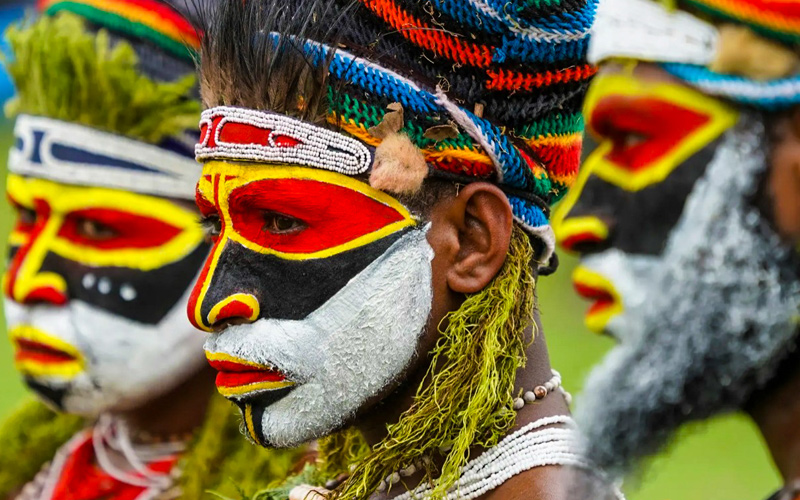
Africa offers voyages along remote coastlines and culturally rich destinations. Latin America stretches from the Caribbean into the Amazon and southern South America. Europe includes Atlantic coastlines. Asia-Pacific opens another universe of islands, including World War II history in Guadalcanal in the Solomon Islands, culture trips to New Guinea, rainforests and marine environments.
The Asia-Pacific program is particularly revealing.
In 2027, Swan Hellenic offers itineraries on the SH Minerva that explore New Zealand in depth, then sail through New Caledonia, Vanuatu, and the Solomon Islands. Other journeys continue toward Papua New Guinea, Raja Ampat, the Philippines, Japan and Korea.
These are not simply tropical beach cruises. A 2027 voyage from Auckland to Honiara, for example, visits New Caledonia, Vanuatu and the Solomon Islands, combining remote island landscapes with encounters with cultures deeply rooted in their environments.
That is where the Swan Hellenic concept becomes particularly interesting: the destination is not separated from the expedition.
The West African example
West Africa offers one of the clearest illustrations of what makes Swan Hellenic different. Rather than concentrating on better-known tourist centers, voyages explore a coastline that remains relatively unfamiliar to travelers.
Already this year, SH Diana has cruised to the rarely visited Bijagos Archipelago of Guinea-Bissau, Sierra Leone, Togo, São Tomé, Gabon, and Angola. These are far from the traditional pristine safari destinations of East Africa. More unconventional stops include Casablanca, remote Norfolk Island, and Heimaey, Westman Island, home to ten million Atlantic puffins. Many other examples of unusual places are accessible through its expedition approach.
The company’s 2027 program takes the idea even further, with long-form West African Grand Voyages that connect Cape Town and Lisbon through multiple countries and an extended exploration of the African Atlantic seaboard. For travelers who have already experienced the classic Mediterranean and Caribbean cruise circuit, this is a very different map.
The luxury is in the access
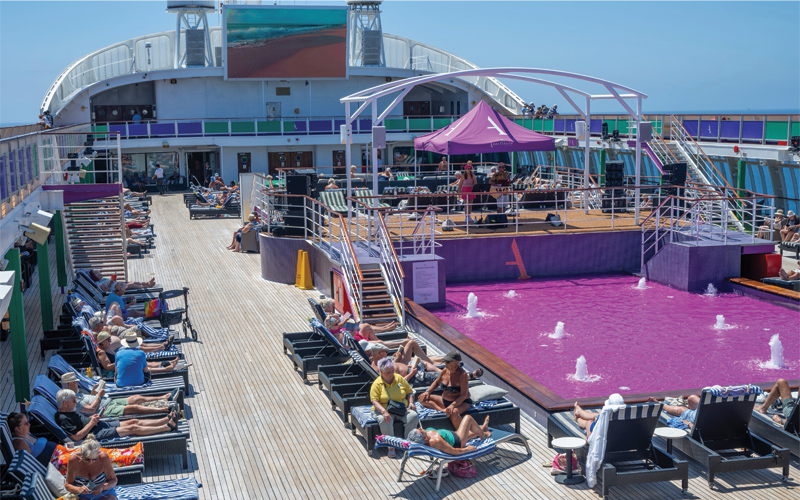
Swan Hellenic’s version of luxury isn’t simply about having a comfortable ship. Absolutely, luxury is part of the equation, with lounges, wellness facilities, and attentive service. Still, the real luxury is access: reaching places larger ships can’t, then having an expert aboard to explain what you are seeing.
Each SH ship carries zodiacs and expedition equipment for landings and exploration. The onboard program may include historians and archaeologists, marine biologists and photographers, botanists and naturalists.
That combination creates an unusual balance. You can spend the morning walking through a remote community or wildlife sanctuary, return to a comfortable suite, attend an expert lecture in the afternoon, enjoy dinner and then watch the landscape change from the observation areas as the ship moves toward its next destination.
One company, very different journeys
Swan Hellenic’s most compelling proposition may ultimately be the range of journeys it can offer.
No single Swan Hellenic passenger or itinerary is stereotypical. The expedition line attracts many travelers who have already visited over 100 countries. One traveler may want to see penguins and icebergs in Antarctica, or polar bears in Greenland. Another may want culture trips to Portugal, Spain, and France, or a glimpse of West African cultures few travelers reach. Another may want to explore remote Papua New Guinea, Raja Ampat, and the Philippines.
There’s inevitably someone looking for a single long expedition that combines several of these worlds.
The common denominator is curiosity.
Swan Hellenic isn’t simply selling conventional routes; it offers the chance to go somewhere unusual, understand what you are seeing, and return home with a deeper sense of the place.
For today’s traveler, especially one who has already seen much of the conventional cruise map, that can be a powerful proposition.
“See what others don’t.” As a slogan, it’s a pretty good description of the journey.